Browser Calling Basics

WebRTC Calling Explained

Place calls from any browser tab at cheap per minute rates with nothing to download. You only pay for a number when you want to receive inbound calls.

The quick facts

  • Outbound: Pay as you go, no dedicated number to buy.
  • Inbound: Add a US/Canada digital number for $2.14 to $5/month.
  • No apps: Runs in Chrome, Safari, Edge, and Firefox.
How It Works
Browser Call DemoWebRTC Ready
Nothing to install. Runs in Chrome, Safari, and Firefox.

What is WebRTC

WebRTC is an open standard that powers live audio and video right inside the browser. No plugins or native apps are needed, and it hands developers low-latency access to microphone and camera streams.

Real-time Audio

Crisp audio backed by adaptive codecs, echo cancellation, and packet loss recovery, so calls stay steady even when the network gets shaky.

Peer Connections

Direct peer-to-peer links use NAT traversal and DTLS encryption to keep your voice data private and protected.

Browser First

Nothing to download. People connect from any modern browser and are calling within seconds once they grant access.

How Intercalling Connects WebRTC to the Phone Network

The browser end runs on WebRTC. Intercalling supplies the signaling, media relay, and a Twilio backed PSTN gateway, so you can dial or answer any number worldwide at cheap per minute rates.

Signaling

We take care of session setup and teardown, so browsers link up securely and fast with zero configuration on your part.

Media Relay

Our media servers tune audio routing, keep things compatible across networks, and expose recording and transcription hooks for AI features.

PSTN Gateway

Calls hand off to the public telephone network through Twilio, so your browser calls land on any mobile or landline number worldwide.

Why Teams Choose Browser Calling

Calling over WebRTC trims operating costs, smooths out agent workflows, and opens up AI tools that run during or after each call.

Copilot and AI Agents

Autonomous voice agents can take inbound or outbound calls on their own. Live copilot tools transcribe the conversation and feed suggested replies to agents while the call is happening.

Conversation flows powered by OpenAI
Accurate transcription via Deepgram speech recognition

Virtual Numbers and Analytics

Buy and manage phone numbers across more than 190 countries while watching call metrics and usage update in real time on a clean dashboard.

Worldwide reach with a local presence
Real time call duration, transcription, and analytics

Frequently Asked Questions

Is WebRTC safe to use?

Yes. WebRTC encrypts both media and signaling, and Intercalling adds secure session management plus proven best practices to guard your calls and data.

Does WebRTC work on mobile browsers?

Modern mobile browsers like Chrome and Safari support WebRTC. For the smoothest calls, run the newest browser version and allow microphone access.

How does transcription work?

Intercalling plugs in speech-to-text engines that transcribe calls as they happen. Those transcripts can drive copilot suggestions or be saved for analytics and compliance.

Do I need Twilio?

Intercalling relies on Twilio behind the scenes to reliably bridge WebRTC sessions to the PSTN. You never need your own Twilio account to use Intercalling.

Ready to start calling from your browser?

Sign up and place your first browser call in seconds at cheap per minute rates. No downloads, no complicated setup.
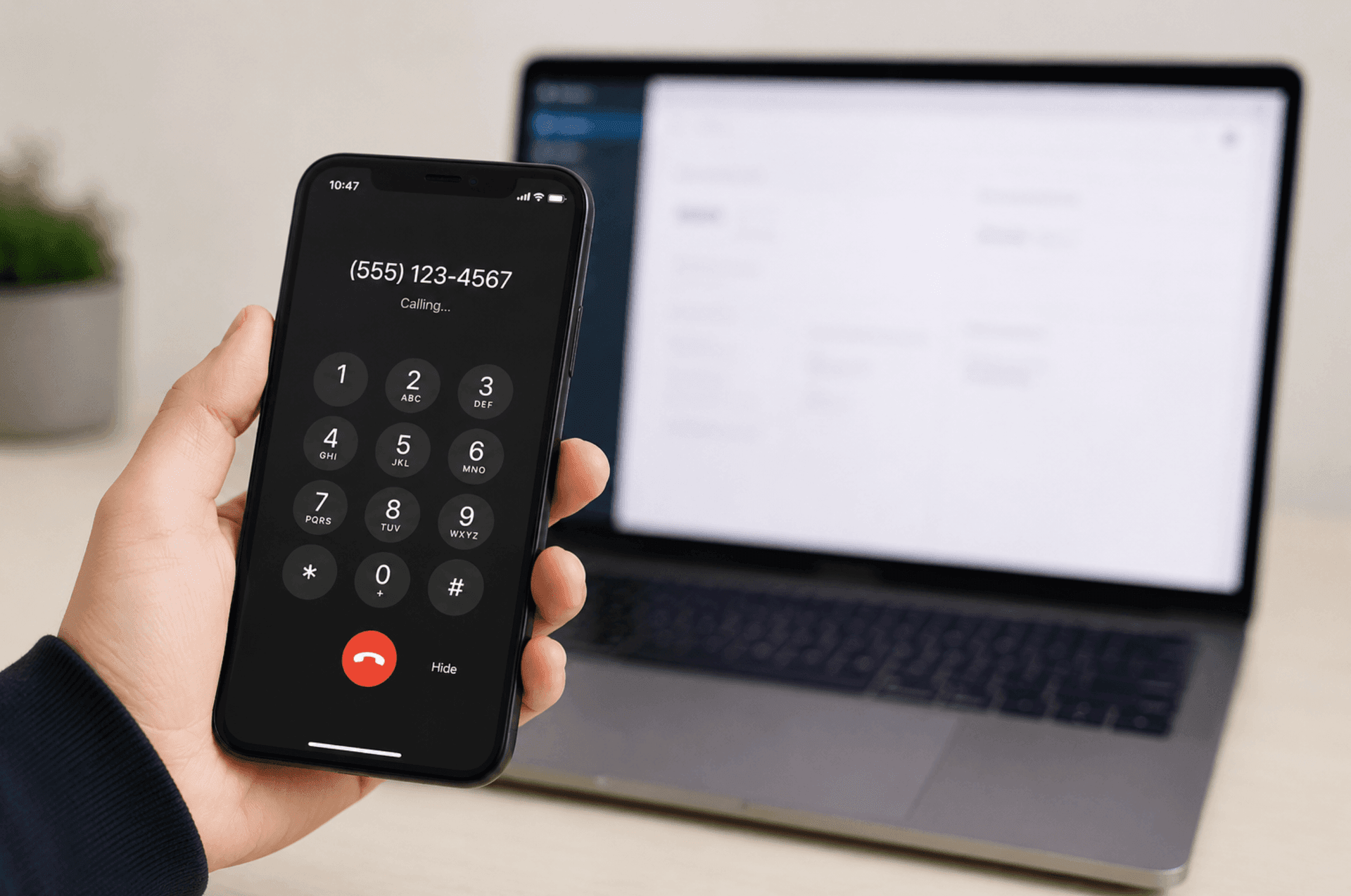
Making an international call from a laptop

Call from any browser

No app and no SIM. Place the call from your computer or phone in seconds.
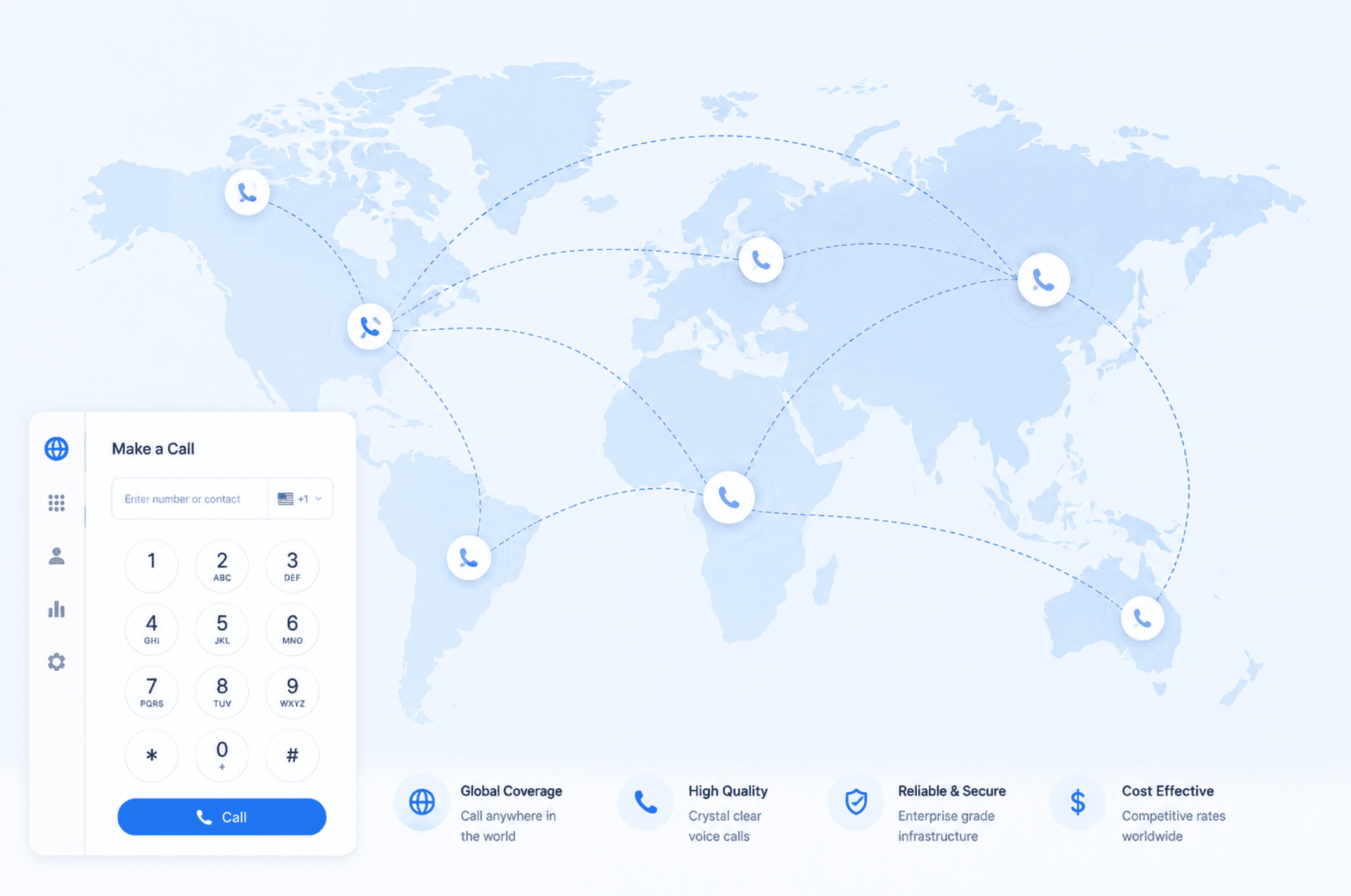
World map of Intercalling calling coverage

Low rates to 190+ destinations

Clear per minute pricing, shown before you dial. Pay as you go, no monthly fee.
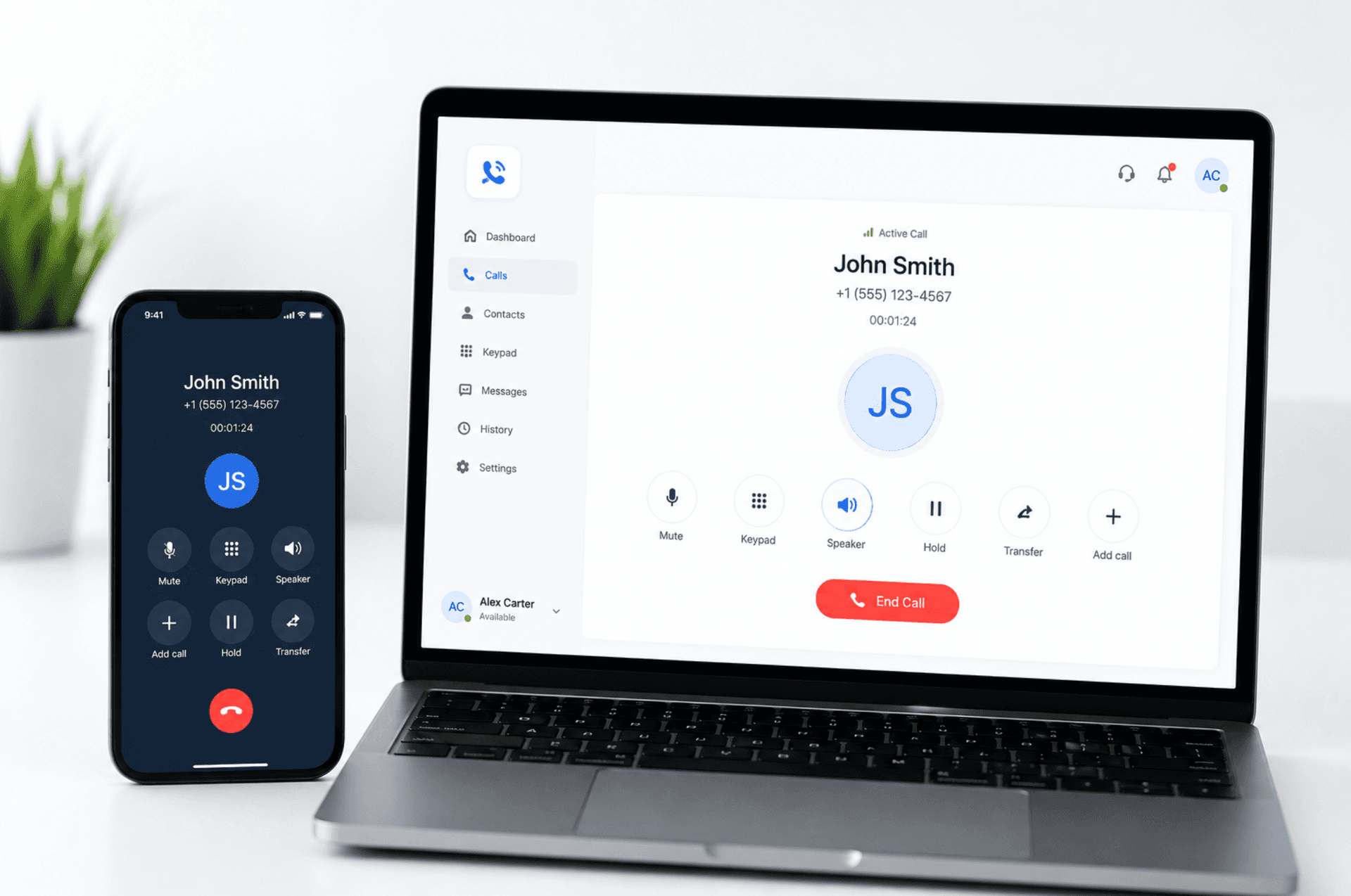
Calling from a phone and a laptop

One balance, every device

Start on your laptop, continue on your phone, all at the same low rate.

WebRTC Calling Explained: How Browser Based Calls Actually Work

In short

WebRTC, short for Web Real Time Communication, is the open technology that lets your browser place and receive voice calls directly, with no app to install and no SIM card. Intercalling uses WebRTC so you can call from Chrome, Safari, Edge or Firefox, pay per minute, and keep every call end to end encrypted.

What WebRTC is and why it matters for calling

WebRTC is a free, open standard built into every modern browser. It captures audio from your microphone, compresses it, and sends it as a real time stream to the other party. Because the engine already lives inside Chrome, Safari, Edge and Firefox, there is nothing to download and no plugin to enable. You open a web page, grant microphone access, and you are ready to talk.

The practical payoff is reach without setup. Any device with a browser and an internet connection becomes a phone. That means a laptop, a tablet, a Chromebook or a phone with no active SIM can all make and take calls, which is exactly why WebRTC has become the foundation for modern browser based calling.

How a Intercalling WebRTC call connects

When you start a call, WebRTC sets up a secure media path between your browser and Intercalling, which then bridges the audio to the regular phone network so you can reach any normal phone number. Outbound calls need no phone number of your own and are pay as you go, billed by the minute, so you only pay for the time you actually talk.

All audio is end to end encrypted in transit, which is one of the core security guarantees of the WebRTC standard. To also receive inbound calls, you add a US or Canada digital number for roughly 2.14 to 5 dollars per month, and incoming calls ring right in your browser tab.

When browser based calling makes sense

WebRTC calling shines for international calls, business lines and privacy minded users. There is no hardware to buy, no contract, and no app permissions beyond the microphone, so you can spin up a working line in minutes and shut it down just as fast. For occasional or unpredictable usage, per minute billing usually costs far less than a traditional plan.

Frequently asked questions

Do I need to install anything to make a WebRTC call?+

No. WebRTC is built into Chrome, Safari, Edge and Firefox, so you only open Intercalling in your browser and allow microphone access. There is no app download, no plugin and no SIM card required.

Is WebRTC calling secure?+

Yes. Intercalling calls are end to end encrypted in transit, which is part of the WebRTC standard. Your audio is protected as it travels between your browser and the network, making it a strong choice for private and business conversations.

How much does a WebRTC call cost?+

Outbound calls are pay as you go and billed per minute, so you only pay for the time you talk and need no phone number of your own. If you also want to receive calls, you add a US or Canada digital number for about 2.14 to 5 dollars per month.

Can I receive calls in my browser too?+

Yes. Once you add a US or Canada digital number, inbound calls ring directly in your browser tab using the same WebRTC connection, so you can answer from any device with a browser.

Last reviewed June 2026Reviewed by the Intercalling calling teamDialing rules cross checked against ITU international dialing procedures
More calling routes

Related international calling guides

Other routes our customers compare with this one. Tap any guide to see dialing rules, country codes, and rates.